
CRG adjunct researcher Claudio Latorre inducted as a corresponding member of the Chilean Academy of Sciences
Chilean paleoecologist Claudio Latorre, an adjunct researcher at the Millennium Institute Center for Genome Regulation (CRG) and an academic at Pontificia Universidad Católica de Chile, has been inducted as a corresponding member of the Chilean Academy of Sciences, recognizing his distinguished scientific career studying the Atacama Desert’s natural and climatic history.
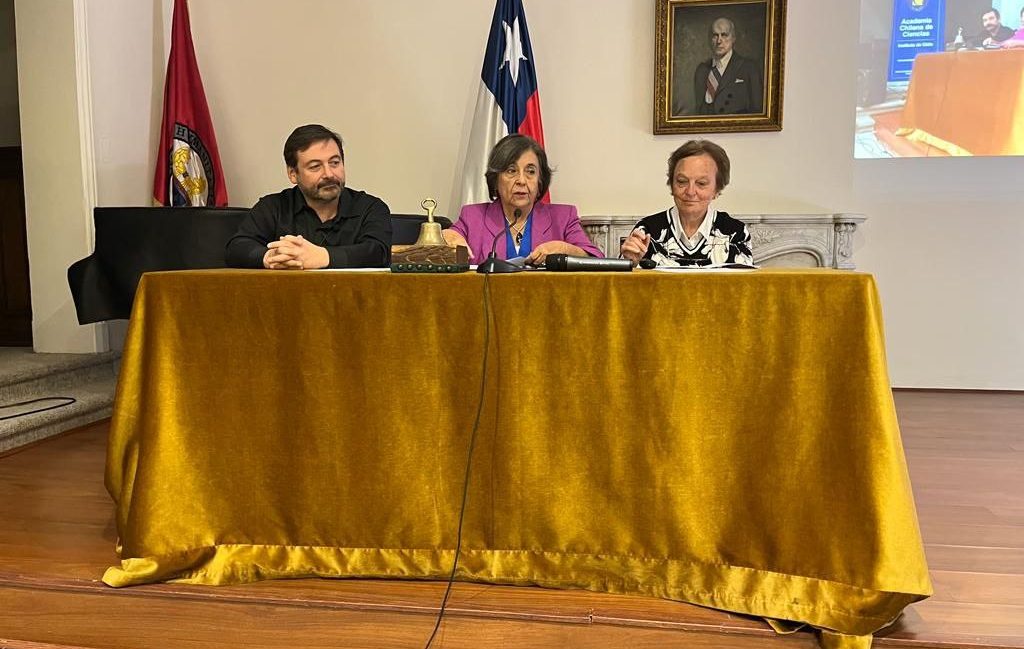
The appointment was announced on May 10 during a public session of the Academy. Latorre holds a doctorate in Ecology and Evolutionary Biology and is a researcher at the Institute of Ecology and Biodiversity (IEB). His extensive career has focused on understanding the past and present distribution of northern Chile’s ecosystems, from the coast to the Andes, and the mechanisms of climate variability that have shaped these extreme landscapes.
During the ceremony, Academy president and neuroscientist María Cecilia Hidalgo highlighted his scientific contribution. “His expertise and knowledge in paleoecology are invaluable to the development of science in Chile and worldwide, both through his research and through the students he has helped train,” she said.
He was introduced by full Academy member Mary Therese Kalin, who emphasized the depth and continuity of his work on the planet’s driest desert. For more than three decades, Latorre has investigated how climate, geography and biology have interacted to shape northern Chile’s ecosystems.
“For more than 30 years I have worked in all the desert’s environments. We need to understand the desert as an integrated system: not only its climate or past conditions, but also the life that adapts to it, including human life and the interaction between society and environment,” he explained.
In his induction address, “Atacama: Natural History of the World’s Driest Desert,” Latorre highlighted the Atacama’s value as a unique natural laboratory for understanding the history of life on Earth, adaptation to extreme conditions, and its relationship with climate change over time.
“I feel very honored to have been accepted as a corresponding member of the Academy, especially given the caliber of its researchers,” he said.
Dr. Latorre’s induction into the Chilean Academy of Sciences recognizes a scientific career of international impact. Among his many distinctions is the Geological Society of America’s Farouk El-Baz Award, considered one of the world’s most important honors in desert ecosystem research.
At the Millennium Institute Center for Genome Regulation, his work contributes to understanding how Chile’s biodiversity and ecosystems have historically responded to extreme environmental changes—knowledge essential for anticipating climate change impacts and protecting the country’s natural systems.