Punta Arenas hosts international meeting to strengthen Southern Ocean and Antarctic research and monitoring
Punta Arenas, January 9, 2026
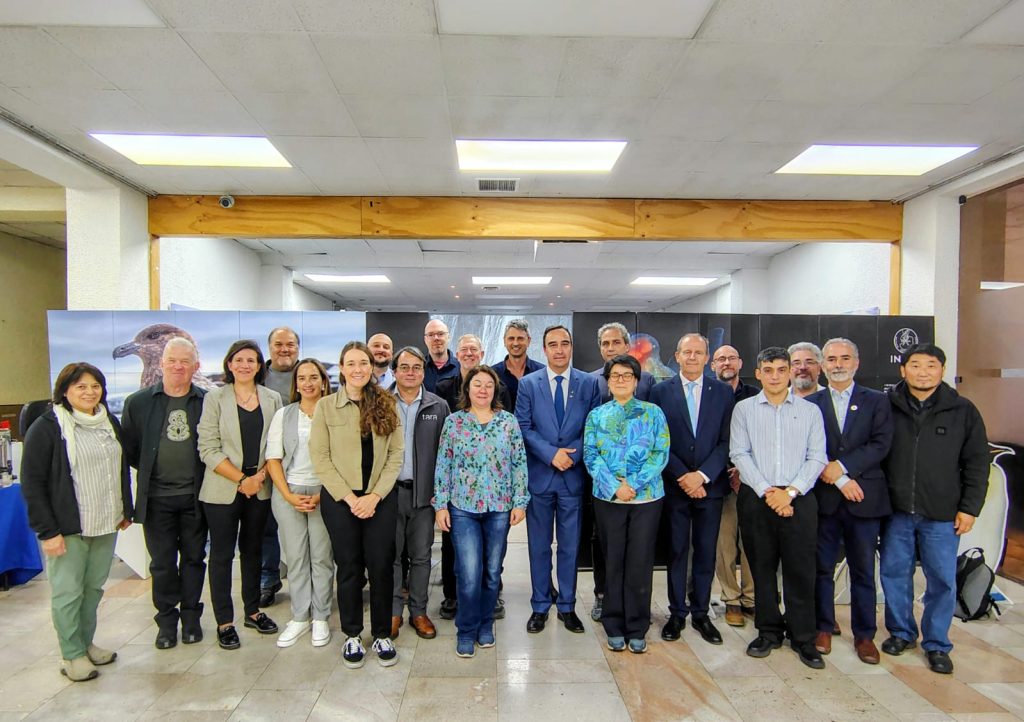
From January 8 to 10, 2026, Punta Arenas hosted the international meeting “Fostering Antarctic and Southern Ocean Research and Policy Actions,” a high-level gathering of representatives from academia, institutions, diplomacy and the private sector. Its aim was to strengthen the use of scientific evidence and monitoring tools to protect Antarctica and the Southern Ocean.
Held at the Chilean Antarctic Institute (INACH), the meeting included regional and national authorities, directors of centers of excellence, representatives of sectoral ministries, and international delegations, including the British Embassy in Chile. Their participation reinforced the meeting’s multilateral nature and a shared commitment to scientific cooperation in southern polar regions.
Andrés Couve, former Minister of Science and Science to Policy adviser to Fondation Tara Océan in Chile, described the meeting as an unprecedented opportunity for different sectors to bring their perspectives together, at a time when the use of scientific evidence in decision-making is being weakened globally. He said it demonstrated that collaboration, multilateralism and institutional commitment can support public policy to protect Antarctica, even in highly complex political and environmental circumstances.
The event arose from international cooperation between Fondation Tara Océan and the PlanktEco project, developed with Universidad de Chile through the Center for Mathematical Modeling and the Millennium Institute Center for Genome Regulation (IM-CRG). It drew on the experience of the Mission Microbiomes–CEODOS expedition carried out in Chile in 2021.
Convergence, cooperation and long-term commitment
A central theme was building institutional commitments with a strategic, long-term perspective, particularly in the context of international milestones such as the Polar Year, which require advance planning and sustained agreements.
André Abreu, Head for International Policy at Fondation Tara Océan, welcomed the results of the Punta Arenas workshop, emphasizing its scientific and political potential:
“The workshop enabled very concrete progress in discussions of management and monitoring tools for Antarctica, using genomic approaches applied to what we call key marine plankton areas. It was a very positive meeting, with highly promising results and an excellent reception from participants.”
Abreu also highlighted how this work connects to future scientific expeditions, particularly the presence of the vessel AARA in the Antarctic region during 2028 and 2029, opening new opportunities to strengthen international cooperation around the InSync program.
He emphasized that the meeting consolidated strategic cooperation among Chile, France and the United Kingdom, with active participation from embassies, government representatives and scientific stakeholders, laying the foundations for coordinated long-term work to protect the Southern Ocean and Antarctica.
Scientific evidence and tools for decision-making
Another priority was agreeing on the best available scientific evidence and the most appropriate monitoring tools to support Antarctic protection decisions.
Andrés Couve stressed the scientific community’s fundamental contribution in providing capabilities, data and robust methodologies to inform evidence-based public policy. The meeting discussed how these tools should be implemented, the capabilities required and the key stakeholders in their development. Genomics, marine plankton monitoring, and coordination between research vessels and icebreakers were highlighted as strategic elements.
André Abreu also emphasized the importance of sustained capacity-building and stronger cooperation with local partners:
“We are very pleased to coordinate with Chilean institutions and build long-term collaborations, not only around research vessels but through robust, innovative science. We have been building bridges since 2015, strengthened after 2020, at a key political moment for the ocean, marked by the Ocean Conference and the entry into force of measures for the high seas.”
Strategic outlook and Chile’s role
The meeting “Fostering Antarctic and Southern Ocean Research and Policy Actions” reinforced the role of Punta Arenas and Chile as a strategic hub connecting science, international cooperation and public policy on Antarctica and the Southern Ocean.
Throughout the meeting, participants emphasized the need for coordinated, long-term work to address climate change and the conservation of polar and subpolar ecosystems, placing scientific evidence and international cooperation at the heart of efforts to protect the South Pacific, Southern Ocean and Antarctica.