
Revealing marine giant viruses’ diversity and cold adaptations, with implications for responses to climate change
In the Southern Hemisphere’s cold oceans, where water temperatures can fall below 10°C, organisms have developed unique survival abilities. Among them are giant viruses: a diverse group of large viruses that infect eukaryotic organisms and, despite their name, can only be seen under a microscope. A recent study in The ISME Journal, part of young researcher Marianne Buscaglia’s doctoral thesis under the supervision of Universidad Católica researcher Beatriz Díez, sheds light on their diversity and how their genomes have adapted to thrive in cold marine environments.
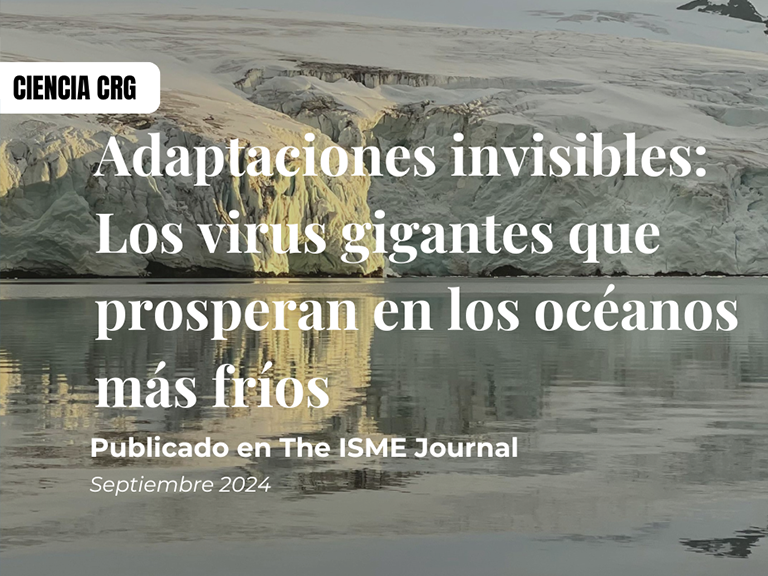
The study identified and analyzed marine giant virus genomes belonging to Nucleocytoviricota and Mirusviricota, collected in Chilean Patagonian fjords and Southern Ocean waters. Comparing these data with viruses from Arctic regions, the researchers found that Antarctic and Arctic viruses, along with some Patagonian viruses, showed a greater proportion of unique viral types apparently restricted to regions below 2°C—especially Antarctica—or 10°C. They exhibited high endemism compared with viruses from warmer regions, which appear adapted to a wider temperature range.
Genetic adaptations in these cold-water viruses include changes in the frequency of certain amino acids in their proteins, potentially allowing their structures to function efficiently in colder conditions. These modifications are uncommon in warm-water viruses, highlighting these biological entities’ specialization for survival in extreme environments.
Against this backdrop, climate change and global warming are raising ocean temperatures, potentially harming cold-adapted viruses and threatening this unique biodiversity. As oceans warm, habitats currently supporting them could disappear, forcing further adaptation or possible extinction.
Their potential loss could have significant consequences for cold marine ecosystems, because these viruses play a crucial role in regulating microbial populations and nutrient cycles. Their disappearance could disrupt these processes, affecting marine ecosystem health and balance.
The study highlights the need to better understand how these viruses, as members of marine microbial communities, respond to climate change. Protecting ocean biodiversity, particularly in polar regions, is essential to maintaining ecosystem stability in a changing world.