Variovorax sp.: promoting bacterial–plant interactions
An innovative study recently published in Scientific Reports opens new possibilities for agriculture in its fight against salt stress. The article, “Variovorax sp. strain P1R9 applied individually or as part of bacterial consortia enhances wheat germination under salt stress conditions,” was produced by an international team led by UFRO researchers Jacquelinne J. Acuña, a CRG adjunct researcher, and Milko A. Jorquera.
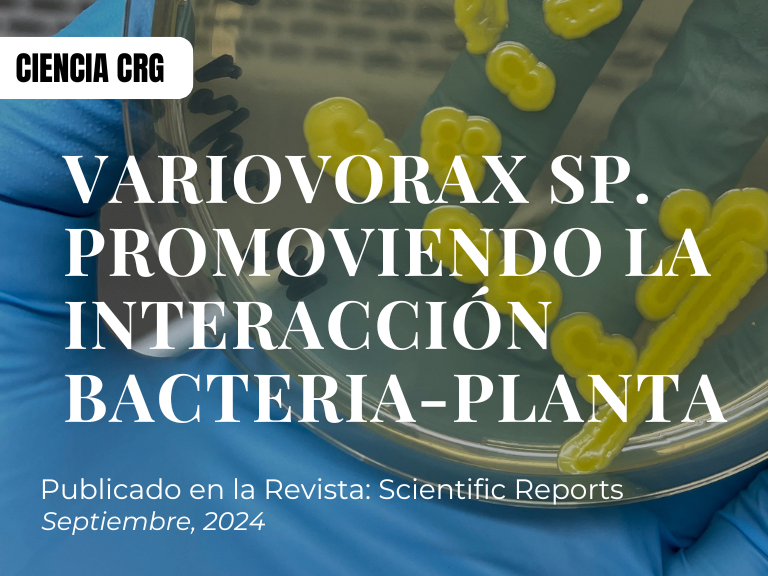
The study highlights the potential of microorganisms adapted to extreme environments to improve crop resilience under adverse conditions.
The problem of salt stress
Soil salinity is a growing problem affecting agricultural production in many parts of the world. When soils contain high salt levels, plants struggle to absorb water and nutrients, reducing growth and productivity. This is particularly concerning in regions such as Chile’s Atacama Desert and Patagonia.
The study’s findings
The research team focused on isolating endophytic bacteria from plants living in extreme conditions in these Chilean biomes. Endophytic bacteria live inside plants and can promote their growth and stress resistance.
Of the 42 bacterial isolates studied, Variovorax sp. strain P1R9 proved particularly effective. In addition to tolerating salt, it can degrade 1-aminocyclopropane-1-carboxylic acid (ACC), a precursor of ethylene that accumulates in stressed plants and can inhibit growth.
Variovorax sp. P1R9: the study’s standout
Improved germination: Variovorax sp. P1R9 improved wheat seed germination in saline soils. Applied alone or with other bacteria, it significantly increased plant biomass. These findings were corroborated when Variovorax sp. P1R9 was combined with bacteria isolated from other ecosystems: wheat plants showed greater salt-stress tolerance than plants receiving microbial consortia without Variovorax.
Reduced cellular damage: Plants inoculated with this bacterium showed a 33–56% reduction in lipid peroxidation, an indicator of cellular damage, under salt stress.
Bacterial consortia: Applying consortia combining several beneficial strains was more effective than applying a single strain. Consortia containing Variovorax sp. P1R9 showed greater benefits for germination and growth.
Practical applications
The findings suggest that applying Variovorax sp. P1R9, alone or within bacterial consortia, could effectively mitigate salinity’s negative effects on wheat. This has important implications for agriculture in regions affected by soil salinity, offering a sustainable, environmentally friendly way to improve crop productivity.
A promising future
Although the precise mechanisms behind Variovorax sp. P1R9’s beneficial effects are not yet fully understood, the study highlights the potential of extreme-environment microorganisms to improve crop resilience. Research continues to uncover these mechanisms and explore larger-scale practical applications.
Nature remains an invaluable source of solutions to tomorrow’s agricultural challenges.