
From desert to code: Atacama students decode the DNA of the “pata de guanaco” flower
What is usually seen as a burst of color in the world’s driest desert became, for two days, a lesson in advanced technology. Seventy students from Vallenar and Copiapó went from observing the landscape to analyzing its molecules in the “Sequencing the Pata de Guanaco” workshop, organized by the Center for Genome Regulation (CRG).
Frontier science in the classroom
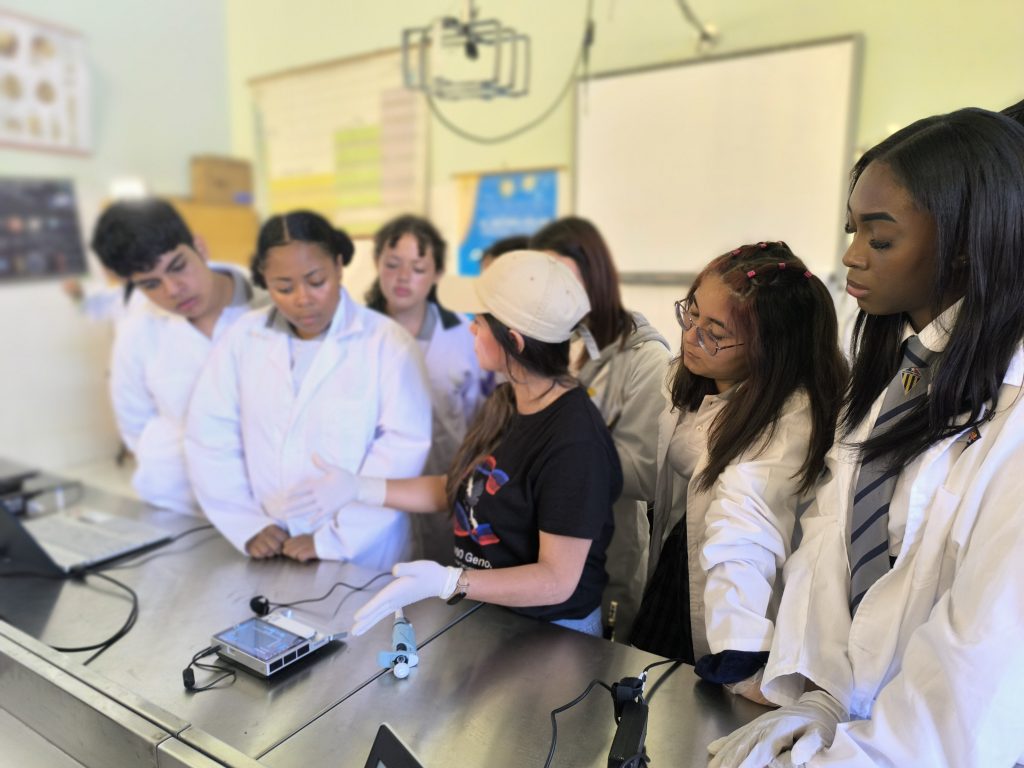
Held in late November, the activity was much more than another lecture. Eleventh- and twelfth-grade students from Liceo Bicentenario in Vallenar and Liceo José Antonio Carvajal in Copiapó became active researchers, taking on the challenge of extracting and analyzing genetic material from Cistanthe longiscapa, commonly known as pata de guanaco.
The flower was not chosen at random. Its ability to survive underground for decades while waiting for rain makes it a genetic “survival manual.” According to CRG experts, understanding its DNA is key to understanding how life adapts to extreme aridity.
The workflow: from tissue to data
The workshop followed the same steps used in a world-class laboratory:
-
Extraction: Students isolated genetic material directly from plant tissues.
-
Bioinformatics: Guided by Gabriela Vásquez, they used digital tools to process the information obtained.
-
Library preparation: Under Macarena Bastidas’s guidance, they learned to “organize” DNA so that machines could read it.
-
Real-time sequencing: The highlight came with the use of the MinION from Oxford Nanopore. This device, small enough to fit in the palm of a hand, showed students that today’s science can be precise and portable without requiring monumental infrastructure.
“Genetics does not only happen in large international laboratories; it is present in the ecosystems surrounding these students,” the initiative emphasizes.
High-level mentorship
The workshop included leading figures in Chilean science, such as researchers Ariel Orellana and Miguel Allende, who, together with Ricardo Yusta, discussed the future of scientific careers and the importance of using technical knowledge to protect Atacama’s natural heritage.
This experience did more than provide information: it democratized access to genomic technology, reminding Atacama’s next generation of scientists that answers to climate change challenges may lie hidden in the roots of the flowers growing in their own backyards.

