CRG and 1000 Genomas sequence the genomes of two endangered species on Rapa Nui
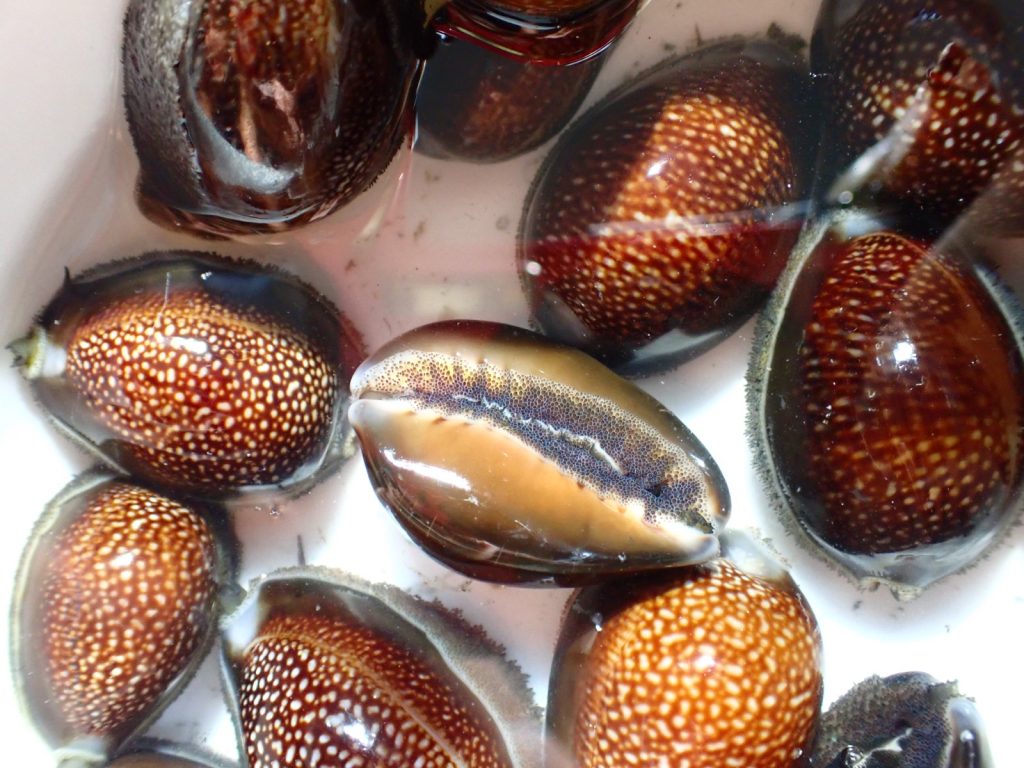
From April 28 to 30, an interinstitutional delegation of more than 20 people traveled to Rapa Nui for an important scientific and educational undertaking: sequencing the genomes of two threatened endemic species—the Henderson petrel (Pterodroma atrata) and the pure cowrie (Monetaria caputdraconis)—and delivering a frontier science workshop for island students.
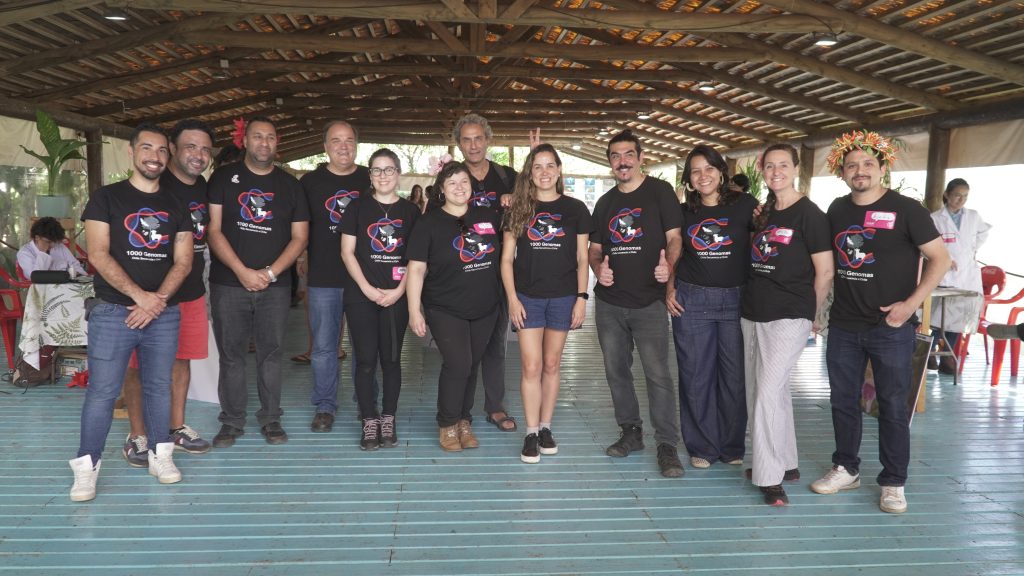
The initiative was coordinated with Rapa Nui’s local and ancestral authorities.
It was led by the Millennium Institute Center for Genome Regulation (IM-CRG) and the 1000 Genomas initiative, with backing from Universidad de Chile. It involved the Undersecretariat of Science, Technology, Knowledge and Innovation, support from the Encuentros del Futuro Foundation, and sponsorship from Oxford Nanopore Technologies.
Genetic analysis of the Henderson petrel and pure cowrie will provide information crucial to their conservation. Studying their DNA reveals their genetic diversity, how they have adapted to their island environment, threats to their survival, and their evolutionary history.
Beyond its importance for designing protection strategies, this information helps explain the species’ ecological roles and their contribution to the balance of Rapa Nui’s ecosystem. Amid climate change and accelerating biodiversity loss, sequencing helps us not only conserve but also deeply understand and value our natural heritage.
Reflecting on the experience, Professor Miguel Allende, IM-CRG director and Universidad de Chile academic, said:
“Bringing frontier science to a place as remote as Rapa Nui, and doing so alongside its students, is profoundly transformative. Enabling young islanders to sequence the DNA of their own biodiversity gives them scientific tools, strengthens their connection to their surroundings, and shows them that they too can play a leading role in knowledge creation. This is the science we want: connected, participatory and rooted in place.”
The delegation included authorities such as Undersecretary of Science Cristián Cuevas; Dr. Héctor Ramírez, director of the Center for Mathematical Modeling (CMM); and Dr. Juliana Vianna of Pontificia Universidad Católica de Chile, national coordinator of the 1000 Genomas Project.
Researchers and master’s and doctoral students from institutions across Chile also joined the delegation.
Speaking for the Ministry of Science, Undersecretary Cristián Cuevas welcomed the experience:
“Knowing the species that inhabit our territory is the first step toward protecting them. Activities like this allow the Rapa Nui community, especially its students, to connect directly with their biodiversity, understand its value and become its principal guardians. Through science, we call for the protection of this unique natural heritage, because protecting it also means protecting our identity and shared future.”
Science education and local engagement
Alongside the scientific work, the Biodiversity in Extreme Environments Workshop was held for eleventh- and twelfth-grade students. They participated in hands-on activities, learned about DNA sequencing technology, and explored conservation concepts focused on their island environment.
The initiative seeks to democratize access to genomic knowledge.
It also aims to inspire scientific careers in remote areas and strengthen relationships between science and local communities.
A community fair and celebration of knowledge
The activity concluded on Wednesday, April 30, with a science fair open to the entire community at the Marae of Hanga Piko. It featured a photographic exhibition on Chilean biodiversity, with images contributed by photographers Nicolle Saffie and Francisco Gamboa, interactive science stations with students, and conversations with researchers. The event brought different forms of knowledge together, celebrating shared learning and a commitment to protecting the island’s biodiversity.
About the 1000 Genomas Project
The 1000 Genomas Project is a national scientific initiative led by the Millennium Institute Center for Genome Regulation (IM-CRG).
It brings together centers of excellence such as the Millennium Institutes BASE, IMO and IBio, alongside CMM, CHIC, ACCDiS and IEB, in partnership with nine Chilean universities. Its goal is to sequence the genomes of native species to understand and conserve Chile’s biodiversity amid the climate crisis and habitat loss.