Biodiversity and food sovereignty: students in Chiloé explore the potato’s genetic legacy
From September 29 to October 1, 2025, the Millennium Institute Center for Genome Regulation (CRG) held the workshop “Chile’s Biodiversity and Food Sovereignty: The Legacy of the Potato” in Chiloé. The educational initiative was designed for eighth- through twelfth-grade students at Colegio San Francisco de Asís in Castro. Over three days, 36 students took part in a scientific experience exploring genetics, biodiversity and sustainable food through one of the archipelago’s most emblematic crops: the potato.
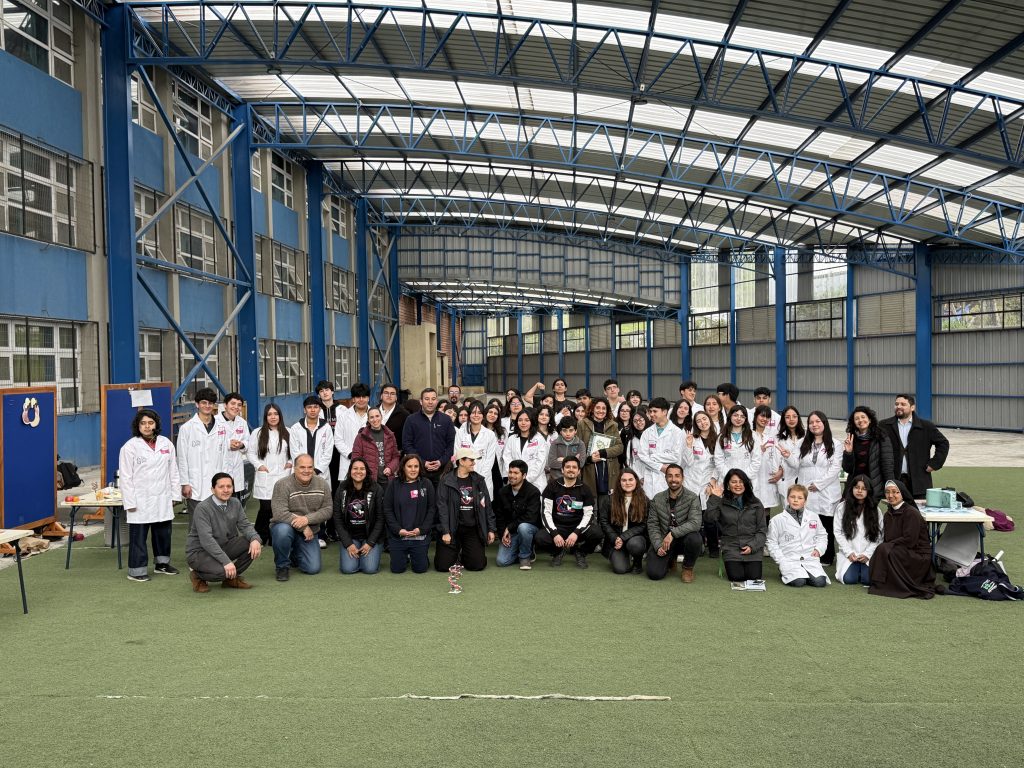
Through hands-on experiments, participants learned how genetic information influences the crop’s visible and nutritional characteristics. Activities included DNA extraction, experiments on starch, pigments and plant respiration, and a talk on postharvest preservation and the value of agricultural biodiversity.
The activity was delivered by CRG researchers and students, including Romina Pedreshi and Miguel Allende, alongside postdoctoral researcher Alexis Gaete, doctoral student Ricardo Yusta, and Pedreshi laboratory students Laura Sepúlveda, Camila Arancibia and Diego García.
The initiative concluded on October 1 with the Dalcahue School Community Science Fair at Liceo de Dalcahue, an open event attended by nearly 300 preschool, primary and secondary students. The workshop participants themselves became guides, leading interactive science stations, presenting experiments and discussing biodiversity, genetics and food sovereignty with the community.
The fair also featured a photographic exhibition and opportunities to interact with researchers, bringing together science, education and local communities. It enabled students to share what they had learned in the workshop with the wider school community, fostering interest in science and highlighting the value of Chiloé’s biocultural heritage.