
Monte Verde no longer anchors the peopling of the Americas: new study questions its age
An international team including Chilean researchers publishes today in Science the first independent investigation of the site in almost 50 years. Its conclusions are striking: the famous archaeological site in southern Chile could be only 8,200 to 4,200 years old, rather than the previously accepted 14,500.
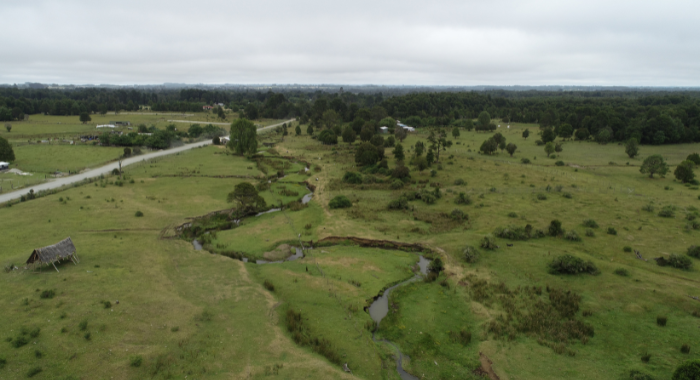
For almost five decades, Monte Verde underpinned one of human prehistory’s major narratives: the arrival of South America’s first inhabitants much earlier than any other site could demonstrate. Located beside Chinchihuapi Creek in the Los Lagos Region, deep in southern Chile, it was excavated between 1977 and 1985 by archaeologist Tom Dillehay’s team. They reported stone tools, wooden remains, extinct animal bones and even chewed seaweed—the famous “quids”—dated to approximately 14,500 years before present.
That made it not only South America’s oldest site but also evidence that humans arrived on the continent before North America’s Clovis culture, challenging the dominant model of the peopling of the Americas. An international expert panel validated the site in 1997, after which it was treated as solid evidence of pre-Clovis occupation.
Until today.
The first independent examination in half a century
The study published this Thursday in Science is the first Monte Verde investigation conducted by a team entirely independent of the original excavators. It is led by Todd Surovell of the University of Wyoming and Claudio Latorre, a researcher at Pontificia Universidad Católica de Chile and the Center for Genome Regulation (CRG), alongside specialists from Chile, Austria and the United States.
Rather than excavating the original site, the team took a different, technically more rigorous approach: describing, sampling and dating nine alluvial exposures along Chinchihuapi Creek to construct an independent geological history of the valley containing the site.
The results led to a conclusion that shakes the field’s foundations: the sedimentary layer containing the MV-II archaeological component cannot predate the Middle Holocene, approximately 8,200 to 4,200 years before present.
The key: 11,000-year-old volcanic ash
The study’s strongest finding is the identification of the Lepué Tephra, a regional volcanic stratigraphic marker dated to 11,000 years before present. Formally named in 2017 but never previously recognized at Monte Verde, this ash layer lies below the stratigraphic unit containing the MV-II archaeological component.
Geologically, this has a direct and unavoidable implication: if the volcanic ash lies beneath them, the artifact-bearing sediments must be younger. The archaeological component cannot be more than 11,000 years old.
There is more. Radiocarbon and optically stimulated luminescence (OSL) dating—a technique measuring how long sediments have been buried—performed directly on the MV-II-bearing unit yielded ages of 8,600 to 2,800 years before present, confirming a Middle to Late Holocene age for these sediments.
The problem of redeposited material
The team also found evidence of a critical geological process: redeposition. Sediments surrounding the artifacts contain abundant ancient wood, peat clasts and organic matter from the Late Pleistocene—the period when the first Americans were thought to have lived there—carried by the creek from older layers into younger deposits.
Simply put, the river picked up old organic materials and buried them alongside artifacts in much newer sediments. This would explain why radiocarbon dates from the site’s organic materials yielded Pleistocene ages: they dated fossilized organic matter transported by the river, not human occupation.
The authors note that this hypothesis would also explain an issue previously raised by some researchers: the extraordinarily wide range of dates reported for the site, inconsistent with the brief occupation originally described.
What does this mean for the peopling of the Americas?
If Monte Verde is only 4,000 to 8,000 years old, the main chronological anchor for South America’s pre-Clovis model falls away. This does not mean humans could not have arrived earlier—other sites with early dates remain under discussion—but it does mean that Monte Verde can no longer be used as evidence to establish that chronological boundary.
The authors say their results reopen the possibility of a more recent colonization and support the viability of an initial migration through North America’s interior corridor, a hypothesis that had lost support precisely because of Monte Verde’s attributed age.
The findings also affect migration-route models: acceptance of the pre-Clovis model had led many researchers to reject the ice-free corridor in favor of a coastal route. That conclusion must now be reconsidered.
Chilean participation and a call for independent verification
The study includes substantial Chilean participation: César Méndez of Pontificia Universidad Católica de Chile and Claudio Latorre, also a researcher at the Millennium Institute Center for Genome Regulation.
In their conclusions, the authors go beyond questioning Monte Verde. They explicitly call on the archaeological community to prioritize independent verification of early sites, emphasizing that almost half a century passed without an independent reassessment of one of the most influential sites in American prehistory.
The paper was received in February 2025, revised in July, and accepted in January 2026. It is published today, March 19, 2026, in Science.
The original article is available at: https://www.science.org/doi/10.1126/science.aef9954?__cf_chl_rt_tk=K91d7A9WYEhGHucmIrq6KjYJh3IOjC7D4RQ9ng.daYo-1773948045-1.0.1.1-KcxGLEoQ6bEHGaQCnkN015fB5kEM28KFnypbhhl6x2M