Science and Nature Biopark: the CRG-backed project seeking to transform conservation in Frutillar
Through an unprecedented alliance between academia and environmental organizations, Universidad de Chile will open its Frutillar Experimental Station to the community in a renewed setting integrating scientific research, education and conservation. The Science and Nature Biopark (BCN) project, promoted by the Millennium Institute Center for Genome Regulation (CRG) together with the Faculty of Forestry and Nature Conservation, aims to turn the site into a living laboratory directly connecting science with local communities and their surroundings.
Located in one of Frutillar’s last native forest refuges, the biopark proposes an innovative model of biocultural conservation: a place where frontier scientific research coexists with environmental education, science outreach and public encounters with nature.
The project envisions a profound transformation of the existing Frutillar Experimental Station. Its master plan includes 12 main components, among them an educational and research laboratory for molecular biology, experimental greenhouses, researcher residences, interpretive native forest trails, and an amphitheater for cultural and science outreach activities. Applied sustainability initiatives will complement this infrastructure, including a constructed wetland for water treatment and areas of active ecological restoration.
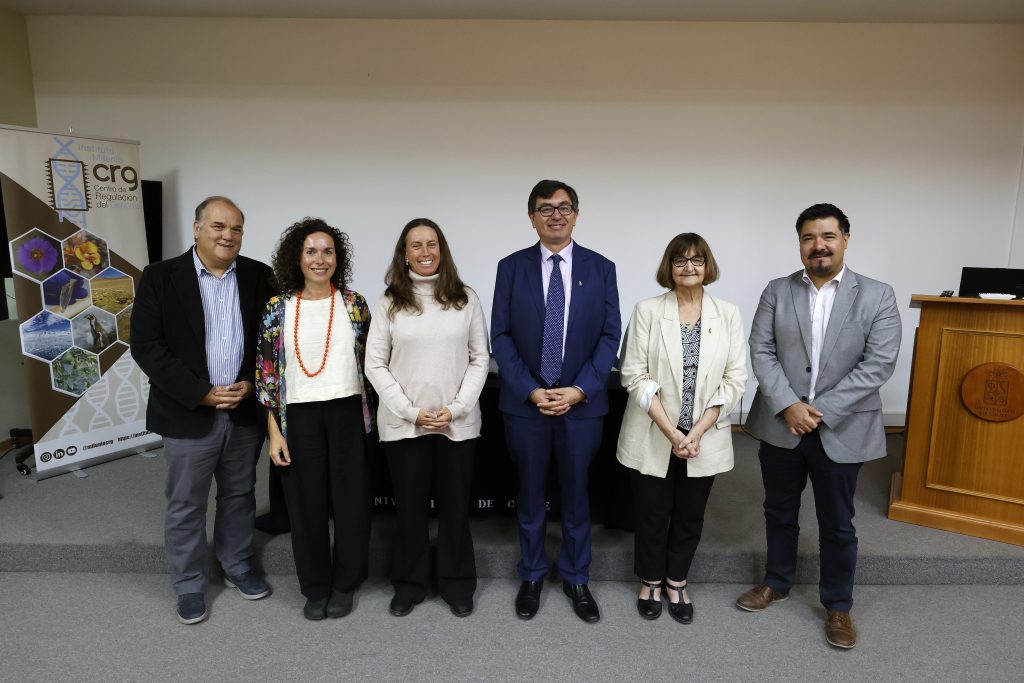
At the project presentation, Universidad de Chile Rector Rosa Devés highlighted its public character:
“This is what Universidad de Chile is: the complexity of combining science of the highest quality with a commitment to sustainability, values and communities,” she said, also emphasizing the importance of strengthening the university’s presence beyond the Metropolitan Region.
Science, conservation and community
The Biopark is being developed through collaboration among the Faculty of Forestry and Nature Conservation, the Millennium Institute Center for Genome Regulation, the Allende Connelly Foundation and the MAPA Foundation. The initiative brings together genomics, biotechnology and forest ecology research to develop new scientifically informed conservation strategies.
Faculty dean Horacio Bown emphasized the project’s educational role and local impact:
“It is primarily focused on education, particularly with rural schools in the area. What matters is how Universidad de Chile can extend its presence into the regions to contribute to development.”
Paulette Naulin, academic director of the Frutillar Experimental Station, explained that the biopark seeks to strengthen the connection between science and society: “We see this as an opportunity to connect directly with society. This project is an invitation to work with communities in southern Chile.”
From a scientific perspective, Universidad de Chile academic and Allende Connelly Foundation president Miguel Allende emphasized the infrastructure’s distinctive character: “The laboratory will be sophisticated enough to conduct real research, with sequencing and molecular biology equipment, as well as hosting visiting researchers.”
María Pía Zerán, co-founder of the MAPA Foundation, highlighted the biopark’s impact on access to science outside the capital: “It is not only about bringing people closer to nature, but about bringing science to our regions.”
A living laboratory for biodiversity
More than a nature park, the Science and Nature Biopark aspires to become an experimental space where science, culture and place enter into dialogue. It seeks to reconnect Frutillar’s urban population with its natural heritage, developing an urban conservation model that can be replicated elsewhere in Chile.
Rooted in the Millennium Institute Center for Genome Regulation’s research on genomics and biodiversity, the project proposes a new understanding of conservation: integrating scientific knowledge, education and public participation to meet the ecological challenges of the 21st century.
Against a backdrop of ecosystem fragmentation and accelerating biodiversity loss, the Biopark is envisioned as an open science hub, where the forest, laboratory and community form part of a shared conservation story.